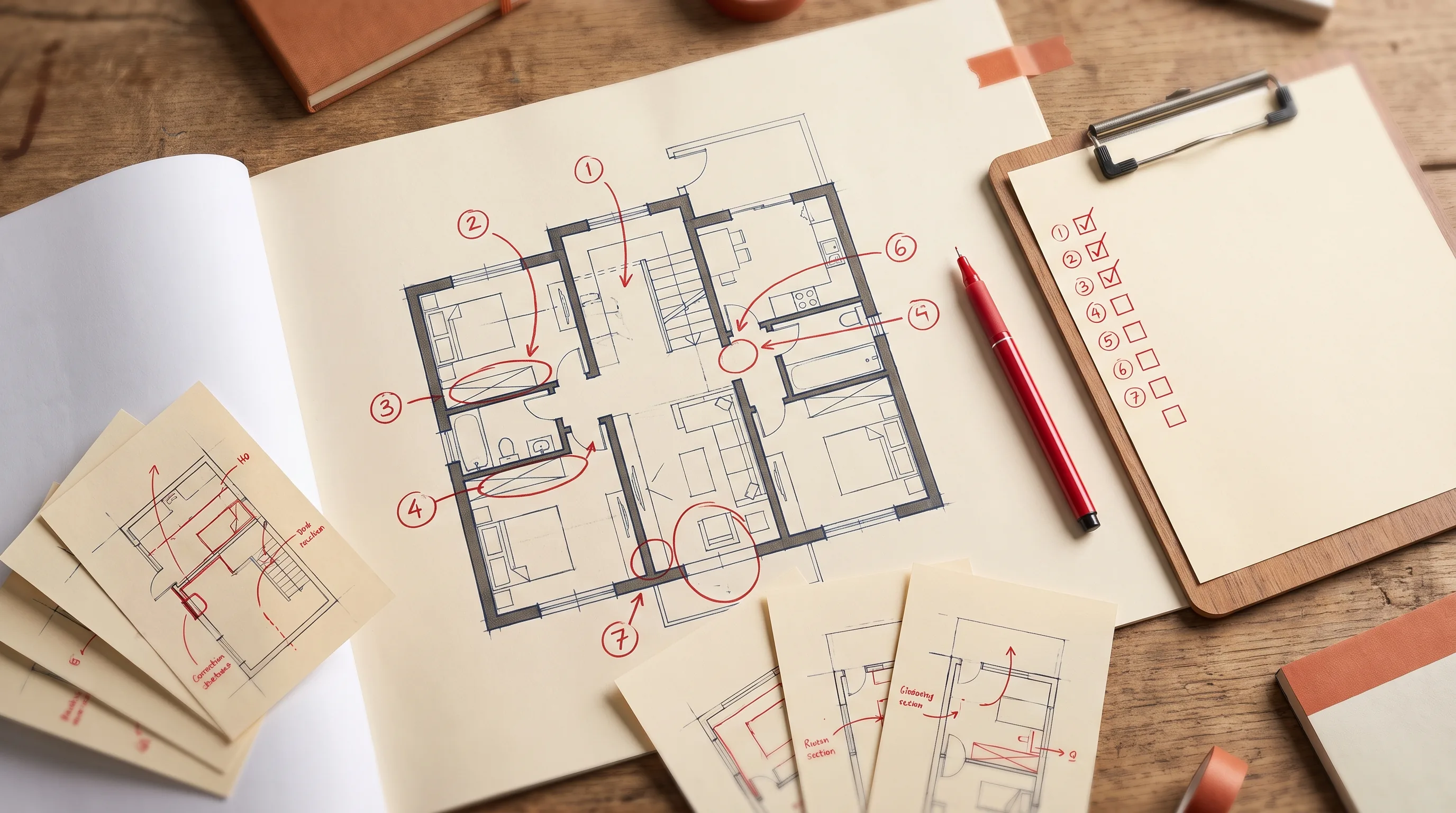
The letter shows up in your inbox with "CORRECTIONS REQUIRED" stamped across the top, and your stomach drops. Or your contractor calls: "Hey, the crew's sitting here, we can't start, the permit's not through." Either way, you're now asking the question everyone in this position asks: why was my building permit rejected, and how long is this going to cost me?
Here's the reassuring part first: rejections are common, rarely fatal, and almost always fixable. The most frequent culprits aren't exotic code violations, they're property boundary and site-data problems, the kind that get caught and corrected all the time. Below are the seven real reasons permits get kicked back, roughly in order of how often they actually show up, plus exactly how to fix a rejection you've already got and how to avoid the next one.
1. Incorrect or outdated property boundary information
What it looks like: The plan checker pulls up the county parcel map, compares it to your site plan, and the lines don't match. Maybe your drawings were based on an old survey from a previous owner. Maybe someone just measured with a tape and eyeballed the rest.
Why it happens: Property lines shift on paper more than people expect, subdivisions get re-platted, easements get added, previous additions get recorded (or don't). A drafter working from an outdated document is drawing the wrong lot, technically.
How to prevent it: Pull current parcel data from the county GIS system and cross-check it against the county recorder's office before anyone draws a single wall. If there's any doubt about where your actual boundary sits, an updated survey is worth the cost.
2. Missing or incorrect setback calculations
What it looks like: Your new addition, deck, or garage doesn't maintain the required distance from the property line, an existing structure, a septic system, a well, or an easement.
Why it happens: Setback rules aren't universal, they change by zoning classification, structure type, and sometimes by which side of the lot you're building on. A drafter who doesn't check your specific zoning before designing is guessing.
How to prevent it: Confirm your property's zoning classification and setback requirements with the planning department before design starts, not after drawings are done. It's a five-minute lookup that saves weeks.
3. Undisclosed utility lines or easements
What it looks like: The site plan doesn't show a utility easement, a buried line, or a recent easement update that changes what's actually buildable on your lot.
Why it happens: Utility records don't always show up on an old survey, and easements get added or modified without a homeowner ever noticing. If your drafter is only working from what's on the existing plat, a newer easement slips right past them.
How to prevent it: Cross-reference utility company records and county records directly, and call in an 811 locate before finalizing the site plan.
4. Inadequate drainage or stormwater planning
What it looks like: The site plan doesn't address how the new construction changes water flow, impervious surface coverage, or stormwater runoff on the property.
Why it happens: Jurisdictions are tightening stormwater and environmental review as they deal with flooding and runoff issues. A drafter working from an older template that doesn't account for current drainage requirements can miss it entirely.
How to prevent it: Ask your building department directly whether your project triggers stormwater or drainage review, especially if you're adding a meaningful amount of roof or paved surface.
5. Missing or incomplete structural documentation
What it looks like: The plan review calls for a structural engineer's stamp and calculations, and your set doesn't have them, or your framing and foundation details for a load-bearing change are incomplete or missing.
Why it happens: Some projects legally require a structural engineer's or architect's stamp on the structural elements, and skipping that step (intentionally or not) is a fast way to get rejected.
How to prevent it: Confirm the stamping requirement for your project type up front, and if structural work is involved, bring in a structural engineer during design, not after a rejection forces the issue.
6. Incomplete or inconsistent drawing sets
What it looks like: Dimensions on the floor plan don't match the elevations. A door schedule is missing. One sheet shows a window that another sheet doesn't. An older revision got left in the set next to newer sheets that don't line up with it.
Why it happens: This is the sloppy-drafting category, and it's the most common reason a set gets bounced for reasons that have nothing to do with code, it's just internal inconsistency. It happens when a set gets revised in pieces without someone checking that every sheet still agrees with every other sheet.
How to prevent it: A QA pass before submission catches almost all of this. Someone who didn't draw the original set should check every dimension against every other sheet, confirm schedules match what's actually drawn, and make sure no outdated revision snuck back in.
7. Missing accessibility, safety, or egress compliance
What it looks like: The plans don't demonstrate compliance with accessibility requirements, fire department access standards, or emergency egress rules, a bedroom without a proper egress window, a path of travel that doesn't meet clearance requirements, that kind of thing.
Why it happens: These requirements are specific and sometimes easy to miss on a residential project, particularly egress sizing on bedroom additions or converted spaces. It's less frequent than boundary or setback issues on a standard residential remodel, but when it happens, it's not a quick fix.
How to prevent it: Confirm egress and life-safety requirements for the specific room type during design. This matters most on bedroom additions, garage conversions to habitable space, and anything involving new sleeping areas.
How to respond to a plan check corrections letter
If you're holding a corrections letter right now, here's the actual process.
Read the whole letter before touching your drawings. Plan checkers list every issue they found in one pass. Don't start fixing the first item you see, read the entire letter first so you understand the full scope of what needs to change.
Call the plan checker directly if anything is unclear. Most building departments will get on the phone and clarify exactly what they need. A five-minute call can save you an entire resubmittal cycle if it stops you from guessing wrong on a correction.
Track every item against the letter, line by line, before resubmitting. This is where people lose time. A partial fix, addressing four out of six corrections, triggers another rejection, and now you're waiting through a whole new review cycle for something you could have closed out the first time.
Build in time for a second review cycle, even on a clean resubmittal. Plan check departments generally re-review the whole set, not just the corrected items. Even a well-handled resubmittal usually isn't instant.
How to avoid rejections next time
The prevention list is short, and it covers most of what's above:
- Have someone who didn't draw the plans do a QA review before you submit. Fresh eyes catch the inconsistencies the original drafter is too close to see.
- Verify jurisdiction-specific requirements before design starts, not after. Zoning, setbacks, utility records, drainage rules, pulling these up front prevents most rejections.
- Confirm whether your drawings need to be stamped before you submit. Getting this wrong is one of the more expensive mistakes, and it's entirely avoidable with one phone call.
None of this requires hiring the most expensive option available. It requires doing the jurisdiction research before drawing anything, and checking the finished set against itself before it goes anywhere near a plan checker's desk.
Before you submit (or resubmit)
Every one of these seven issues is preventable with jurisdiction research done up front and a real QA pass before submission. If you've already got drawings, whether they're freshly rejected or about to be submitted for the first time, we'll do a jurisdiction-first review and flag anything likely to get flagged, before you find out from a corrections letter. Start with permit drawing services. If you're already holding a corrections letter, see How to Respond to Plan Check Corrections for exactly how to structure the resubmittal.