Before any municipal authority stamps a construction project for approval, one pivotal document package steps into the spotlight: the permit set. On active construction sites, the phrase gets tossed around casually, yet few pause to dissect what truly constitutes a complete permit drawing package and why its precision can either accelerate approvals or mire a project in bureaucratic standstill.
An intelligently assembled permit set expedites the building permit review process. A fragmented or poorly coordinated submission, however, often spirals into correction notices, revision rounds, permit delays, and needless carrying costs.
For contractors, developers, architects, and property owners, grasping the anatomy of a permit set is not optional. It is operationally decisive.
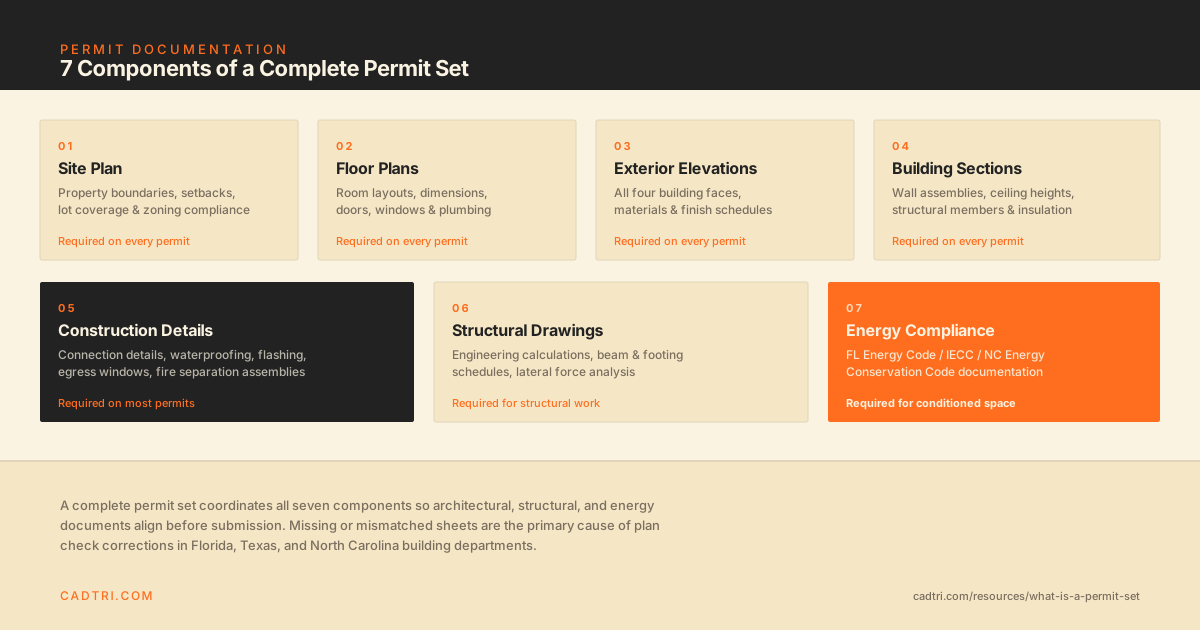 The 7 components of a complete permit set: site plan, floor plans, elevations, sections, details, structural drawings, and energy compliance documentation
Understanding the Purpose of a Permit Set
A permit set is a meticulously coordinated cluster of architectural drawings, structural documentation, code compliance sheets, and supplemental construction records prepared for submission to the local building department.
Its sole function is straightforward yet consequential: provide plan reviewers with sufficient technical clarity to verify compliance with building codes, zoning ordinances, safety regulations, accessibility mandates, and energy efficiency standards.
During the plan check process, municipal reviewers evaluate the construction documents and either:
- Approve the application
- Request corrections
- Issue comments for revision
- Reject the submission outright
The composition of a permit set fluctuates according to project typology, occupancy classification, municipal jurisdiction, and construction scope. A residential bathroom remodel permit package bears little resemblance to a ground-up commercial construction drawing set. Nonetheless, both serve the identical objective: eliminate ambiguity before construction commences.
Core Components Found Inside a Permit Set
Site Plan
The site plan functions as the geographical backbone of the construction permit package. It illustrates property lines, easements, setbacks, lot dimensions, driveway access, utility positioning, existing structures, and the placement of proposed improvements.
For residential drafting projects, municipalities frequently scrutinize:
- Lot coverage calculations
- Floor area ratio (FAR)
- Building separation distances
- Drainage paths
- Zoning setbacks
- Grading conditions
In many jurisdictions, zoning verification occurs before the architectural review even begins. A flawed site plan can halt the permitting process before deeper examination unfolds.
Floor Plans
Floor plans depict the spatial choreography of the structure level by level. These sheets communicate room layouts, wall assemblies, door and window locations, circulation paths, dimensions, fixture placements, and demolition boundaries.
For renovation projects, remodeling plans, and home additions, the drawings usually distinguish existing conditions, demolished elements, and proposed modifications.
Without lucid annotation, plan examiners are forced into assumption-making, something building departments categorically avoid. Comprehensive architectural floor plans also support construction estimating, subcontractor coordination, and permit expediting efforts.
Exterior Elevations
Elevation drawings portray the vertical appearance of the building from every visible facade. These sheets reveal wall heights, roof slopes, finish materials, window alignments, exterior cladding, and architectural proportions.
Planning divisions and design review boards often inspect elevations separately from structural reviewers, especially in municipalities with neighborhood design ordinances or historical overlays.
For kitchen remodels and bathroom renovation permits, some cities additionally request interior elevations to verify cabinetry, plumbing fixture locations, and ventilation clearances.
Building Sections
Building sections slice through the structure to expose the concealed anatomy of the building. These drawings clarify the vertical relationship between floors, ceilings, foundations, roof systems, and grade conditions.
Permit reviewers habitually lean on section drawings when evaluating ceiling clearances, stair geometry, insulation assemblies, structural load paths, and unconventional framing conditions.
On projects involving split levels, vaulted ceilings, retaining walls, or complex framing transitions, section sheets often become the most intensely reviewed pages in the entire permit drawing set.
Construction Details
Construction details magnify specific assemblies at enlarged scales where broader plans cannot adequately communicate technical intent.
These details commonly illustrate:
- Waterproofing conditions
- Stair assemblies
- Wall section compositions
- Flashing installations
- Structural fastening methods
- Shear wall connections
- Foundation interfaces
This is where code compliance frequently becomes explicit rather than implied. A missing detail can trigger plan check comments that reverberate through the entire construction timeline.
Structural Drawings and Engineering Calculations
Projects involving structural modification generally require a dedicated structural engineering package prepared by a licensed engineer.
This portion of the permit set may contain:
- Foundation plans
- Framing layouts
- Beam schedules
- Connection details
- Lateral load calculations
- Structural notes
- Engineered calculation booklets
One of the most recurring causes of permit corrections stems from poor coordination between architectural drafting and structural engineering sheets. If dimensions conflict, framing diverges, or load-bearing conditions mismatch, reviewers flag the discrepancy immediately. Successful permit approval relies heavily on interdisciplinary synchronization.
Energy Compliance Documentation
For construction projects in Florida, Texas, and North Carolina, energy code compliance documentation is indispensable. Whether the project involves residential construction, commercial tenant improvement work, or new building development, municipalities require verified energy calculations demonstrating adherence to the applicable state efficiency standards.
The compliance package is ordinarily prepared by a certified energy consultant and submitted alongside the architectural permit drawings. Without approved energy compliance documentation, permit applications simply do not advance through plan approval.
Supplemental Construction Documentation
Depending on the municipality, permit category, and project complexity, additional supporting records may be mandated, including:
- Civil engineering drawings
- Grading and drainage plans
- Accessibility compliance sheets
- CALGreen checklists
- Geotechnical soil reports
- Landscape documentation
- Stormwater management plans
- Fire sprinkler layouts
- MEP drawings
Each jurisdiction enforces its own submission matrix. Ignoring municipal submittal prerequisites is one of the quickest ways to derail permit approval schedules.
What Distinguishes a Complete Permit Set From an Incomplete One?
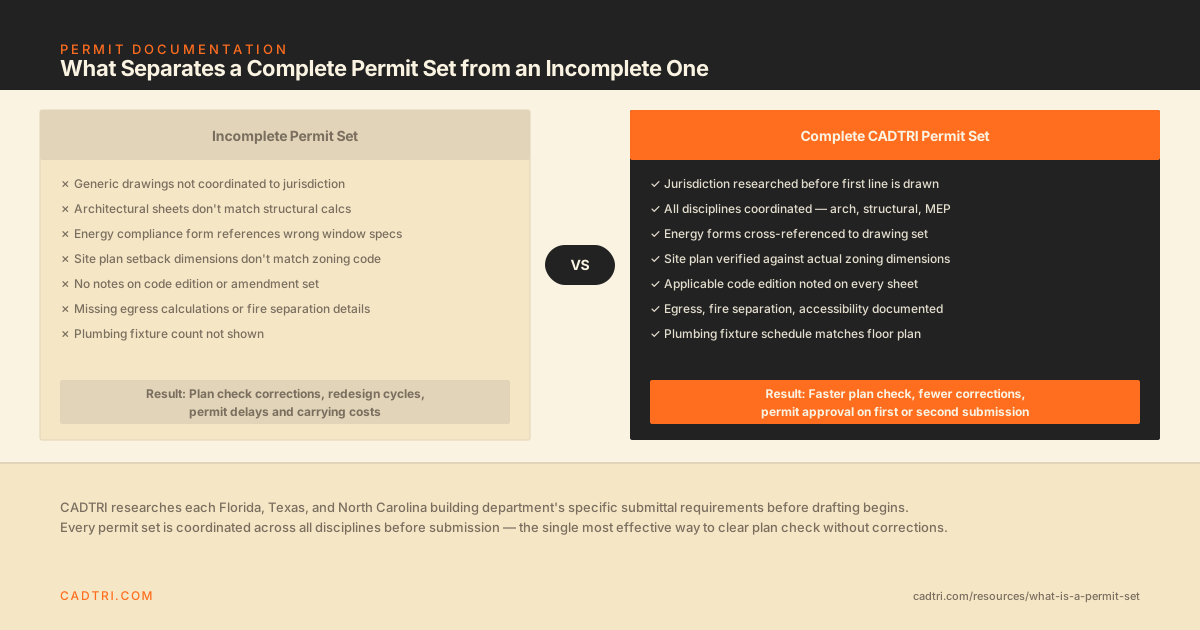 Complete vs incomplete permit set: what separates a first-pass approval from a correction cycle
A permit package capable of clearing first-round review usually demonstrates three defining characteristics.
1. Jurisdiction-Specific Research Before Drafting Begins
Every city and county maintains distinct permit submittal requirements. A permit drawing package prepared against the wrong checklist almost inevitably returns with deficiencies.
Competent drafting teams begin by examining local building department checklists, zoning ordinances, adopted building codes, energy requirements, and planning department standards. This preliminary reconnaissance drastically reduces correction cycles later.
2. Coordination Across All Disciplines
Permit reviewers routinely uncover inconsistencies between architectural plans, structural calculations, MEP layouts, and civil sheets. Misaligned dimensions, absent references, or contradictory assemblies immediately generate red flags during plan review.
An accurately coordinated construction document set eliminates these friction points before municipal submission occurs.
3. Exhaustive Notes, Schedules, and Annotations
Incomplete notation forces reviewers into speculation, a scenario no jurisdiction tolerates.
Strong permit sets ensure dimensions close correctly, window schedules match every opening, structural references align with detail callouts, and code annotations appear precisely where applicable.
Permit expediting is rarely about luck. More often, it is the byproduct of disciplined documentation.
How CADTRI Develops Permit Sets
CADTRI approaches permit drafting with a jurisdiction-first methodology. Before production commences, the team investigates the precise municipal submission standards governing the project.
When structural engineering coordination becomes necessary, CADTRI collaborates directly with engineers to align architectural drawings, framing systems, and calculation packages into a cohesive permit-ready submission.
Every permit set undergoes internal review before filing to minimize omissions, coordination conflicts, and correction-triggering discrepancies. The objective is not merely permit submission. It is streamlined first-cycle approval.
If your project requires architectural drafting services, permit drawings, construction documentation, residential CAD drafting, or commercial permit sets, request a proposal and we will confirm the scope, jurisdictional prerequisites, production timeline, and submission pathway before the process begins.